
The total amount of fraud reported by banks showed a drop in 2020-21 - for the first time in eight years - though there is an emerging trend of private sector banks reporting a larger number of frauds related to card and internet banking. According to the latest data released by the Reserve Bank of India, commercial banks reported Rs 1.38 trillion of frauds in 2020-21, as compared to Rs 1.85 trillion in the previous year. The first half of the current fiscal year saw banks reporting frauds worth Rs 36,342 crore.

India's time use survey for January-December 2019 had found that an average person in urban areas spends 485 (eight hours and five minutes) minutes on employment and related activities.

If booster shots are given on priority, the pace of vaccination may slow further. In the worst case scenario, the country will take till mid-March to vaccinate its entire adult population partially.

West Bengal, Rajasthan and Bihar were worst in terms of women marrying at an early age.

States' spending doesn't improve the public image of the police, so where is the money going?

Tokenisation is the process of replacing debit and credit card numbers with a set of characters or tokens.

The share of total health expenditure as part of the gross domestic product (GDP) went down to 3.3 per cent in 2017-18 from 3.8 per cent in the previous two years, according to the national health account data released on Monday by the health ministry. The share of government expenditure as part of total expenditure as well as GDP has gone up from from 3.78 per cent to 5.12 per cent between 2013-14 and 2017-18, which could also explain a decline seen in out of pocket expenditure in 2017-18. Health ministry also emphasised the increase in the government health expenditure as part of the total GDP from 1.15 per cent in 2013-14 to 1.35 per cent in 2017-18.

The draft amalgamation scheme of Punjab and Maharashtra Co-operative (PMC) Bank with Unity Small Finance Bank (SFB) allowed quick relief to depositors with savings of up to Rs 5 lakh, but a long wait for those who had their nest egg with the scam-tainted bank. If the scheme gets approved, 96 per cent (or 880,000 of 924,000) depositors will get their full money straightaway after PMC is merged with Unity SFB. According to the draft scheme, retail investors may get up to Rs 5 lakh from the Deposit Insurance and Credit Guarantee Corporation (DICGC) instantly, and then some more in phases till they can recall their full deposits after 10 years.
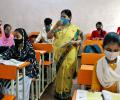
North-eastern states have led the charge in recording a decline.

The Insurance Regulatory Development Authority of India (Irdai), the regulator for insurance companies, is set to allow the insurers to offer wellness programmes along with life insurance policies that can earn reward points for the policyholders. These reward points can be redeemed for getting a discount during renewal. The insurance regulator has circulated draft guidelines to insurance companies for feedback before issuing the final guidelines, as is the norm.

A lot depends on how Srei shapes up under the new administrator and his team, which is critical for investors' interest.
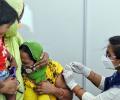
Experts, however, feel that given the intensity of the second wave and the high single dose coverage, India is in a good position to avoid any drastic wave in the near future.

Term insurance policy premiums are set to rise by 25 to 30 per cent with Munich Re, the largest reinsurer for the Indian insurance market, increasing its rates for underwriting portfolios of pure protection plans by up to 40 per cent. According to a senior executive of a private life insurance company, the global reinsurer has communicated its decision about increasing rates. About 8-10 insurance companies have been informed about the move, sources said.

The recent Reserve Bank of India (RBI) norms on tokenisation services, which will be offered by card networks, are likely to result in merchants and payment aggregators incurring a cost as they have to pay a fee to the networks. The merchants and the payment aggregators, in turn, may pass on the cost to the customers. The norms, which were issued by the banking regulator released on September 7, allow card networks like Visa and Mastercard to offer the tokenisation service.

With the maximum dose gap of four months for Covishield, a large part of the population would not even be eligible for the second dose by the end of this year, report Ruchika Chitravanshi and Ishaan Gera.

India was among the top-five economies with the largest general government capital stock level, said, in 2015, an International Monetary Fund report called "Making Public Investment More Efficient". The report fuelled a debate on countries sitting on piles of cash that could be used better. India was believed to have public assets worth $4.5 trillion. The report urged countries to start asset recycling. Six years after the report, Australia's success in asset recycling has turned India into a believer; despite doing averagely in its previous efforts on roads, railways or meeting its divestment targets.
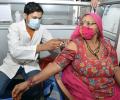
As the rural areas account for more than 40% of the country's population, they need to receive at least 41.7 per cent of the doses to make vaccine administration more equitable, reports Ishaan Gera.

In 2019-20, the capital expenditure of Indian Railways (IR) increased 60 per cent over 2016-17. The draft National Railways plan envisages a further increase in IR's capital expenditure, but an analysis by Business Standard shows that IR has come to depend more on borrowings and budgetary support. In 2016-17, while 11 per cent of its capital expenditure (capex) was funded by internal sources, in 2019-20 the ratio dropped to less than 1 per cent. A 2015 Committee on Restructuring Railways had flagged that over-reliance on borrowings could exacerbate the financial situation of Railways.
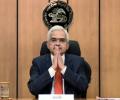
'Even if there is a third wave or a fourth wave, it is hard to see the economy will suffer like that (during the first wave).'

The reason for vaccination not doing enough to stave off infection is partly that the rates of the fully vaccinated population are still below 20 per cent in most districts.
 © 2025 Rediff.com - Investor Information - Advertise with us - Disclaimer - Privacy Policy - Sitemap - Feedback - About us - Terms of use - Grievances